
Featured
Enjoy a 10-day budget Egypt tour overland from Cairo to Alexandria, then south to Aswan and Luxor with rich culture and history.
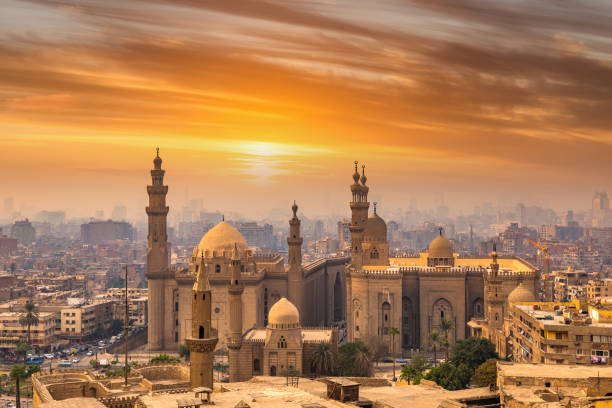
Travel across Egypt in 10 days without overspending. This overland journey connects the country’s most famous cities in one smooth route. First, you explore Cairo’s highlights. Then, you visit Alexandria by the Mediterranean Sea. After that, you travel south to Aswan and Luxor. As a result, you enjoy a rich and complete Egyptian experience at great value.
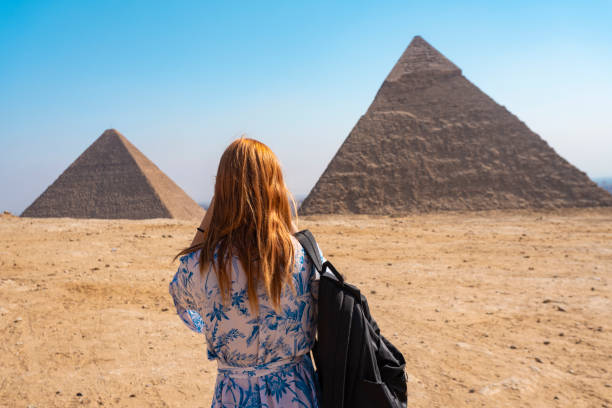
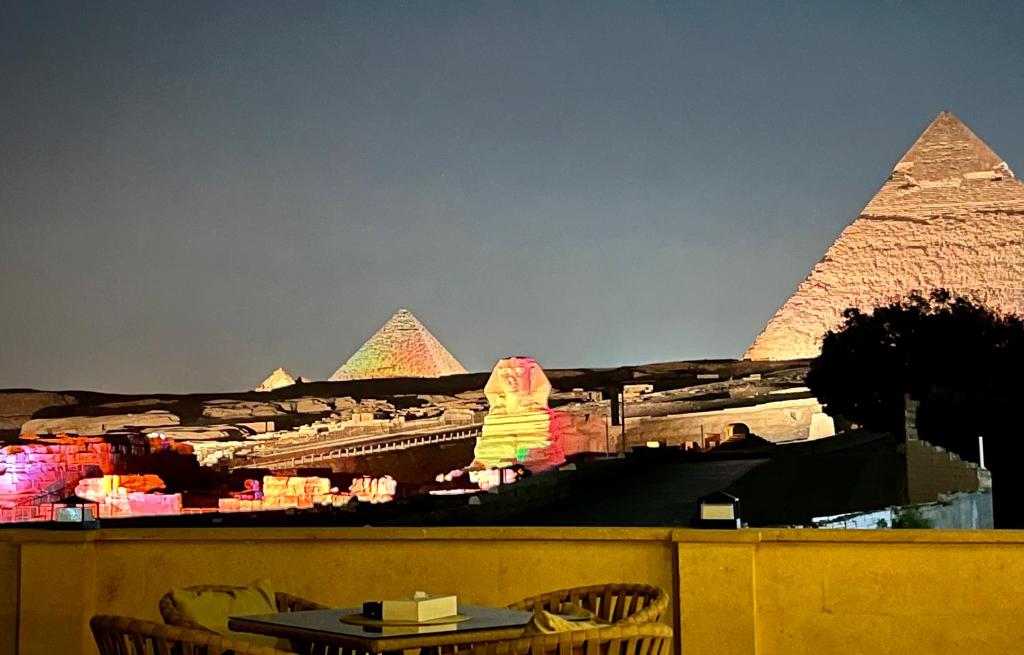
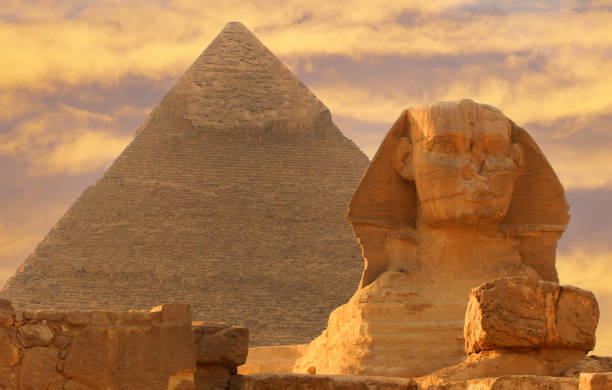
Your adventure begins in Cairo, where history meets daily life. Visit the iconic Giza Pyramids and the Great Sphinx. Then, explore museums filled with ancient treasures. Meanwhile, wander through busy local markets. In addition, guided tours help you understand each site clearly and easily.
Next, head north to Alexandria. The city offers a refreshing change with its sea views and relaxed vibe. Walk along the Mediterranean coast and explore historical landmarks. Moreover, the mix of culture and scenery creates a unique experience.
After Alexandria, begin your journey to Upper Egypt. Aswan welcomes you with calm Nile views and warm hospitality. Visit beautiful temples and enjoy peaceful surroundings. Furthermore, the slower pace allows you to relax and take in the scenery.
Continue to Luxor, one of Egypt’s most remarkable destinations. Visit the Valley of the Kings and explore the massive Karnak Temple. In addition, expert guides share stories that bring history to life. Therefore, every moment feels engaging and memorable.
This overland tour offers more than just destinations. You also enjoy the journey itself. As you travel between cities, you see different landscapes and local life. Consequently, the experience feels authentic and immersive.
Although this is a budget tour, comfort remains a priority. You stay in clean hotels and travel in air-conditioned vehicles. Moreover, organized services ensure a smooth trip. Therefore, you enjoy Egypt comfortably while saving money.
🏜️ Visit the Giza Pyramids and the Great Sphinx
🏙️ Explore Cairo’s museums and local bazaars
🌊 Discover Alexandria’s Mediterranean coastline
🚐 Enjoy a scenic overland journey across Egypt
⛵ Experience the beauty of the Nile in Aswan
🏛️ Visit the Valley of the Kings and Karnak Temple in Luxor
🌅 Capture stunning sunrise and sunset views
🧭 Learn from expert local guides
🏨 Stay in comfortable budget-friendly hotels
Arrival to Egypt
Welcome to Cairo. Your tour begins when you are greeted by our representative who will assist you. After you have collected your luggage, he will then take you, in our deluxe vehicle, to your Cairo hotel.
Overnight in Cairo
Meals: Welcome Drink
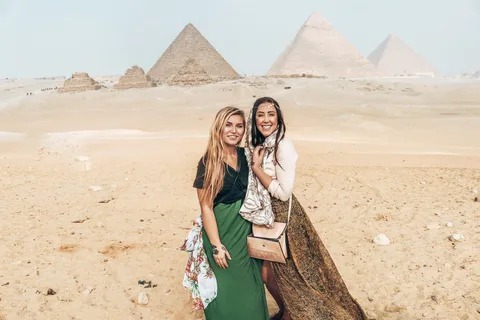
At 09 am you will meet your tour Guide and start your day to the great Pyramids area which includes:
The three main pyramids of Giza (Khufu, Khafre, and Menkaure) are sufficient enough to build a 2-meter-long wall and span 100,000 square kilometers around the globe along with the equator.
The Great Pyramid of King Khufu is considered largely represents the spirit of ancient Egypt, King Khufu who built this Pyramid as a cemetery has left little information about his reign. Khufu ruled for about twenty-four years. Ironically, despite the enormity of his pyramid, the only statue of King Khufu himself is really small statue carved from ivory.
Who among us when mentioning the name of the Sphinx does not think about this stone sculpture that carved in the form of the human head and lion body, which is located in the Giza plateau in Egypt the Sphinx is one of the oldest and the largest sculptures in the world, it’s about 73.5 meters long and 6 meters wide.
There have been many and different opinions about the symbol represented by the Sphinx, Old views said that it represents the wisdom of man and the strength of the lion together and these qualities were applicable to “King Khafre“.
It was used as a place for the embalming process. This temple constructed definitely for two functions: First, it was used for the purification of the mummy before its burial. Second, it was used for making the Mummification process of the king.
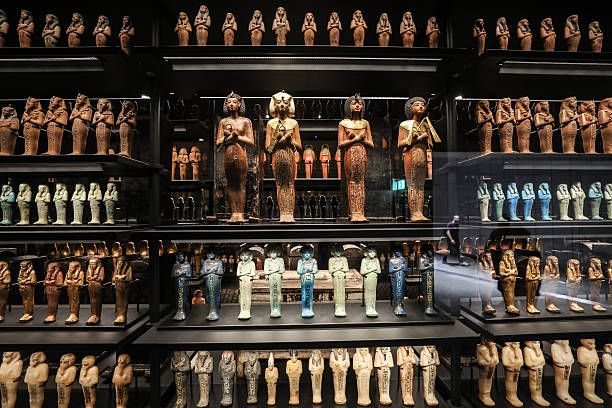
The museum houses a collection of the most valuable Egyptian artifacts ever from various periods of the Egyptian civilization, from the Predynastic Period to Coptic Egypt, with an estimated total of over 100,000 artifacts, including at least 20,000 that will be displayed for the first time ever, including the complete King Tutankhamun collection comprising 5,398 pieces. The Tut collection is on display in a 7,500 m2 section of the museum. Rare pieces that have been restored will be displayed for the first time, such as the second solar ship of Khufu, the restoration of which cost $5 million, the collection of Queen Hetepheres (mother of King Khufu), and the collection of Yuya and Thuyu (parents of Queen Tiye).
A new day starts with breakfast, and then you will be driven catch your flight to Aswan where your guide will take you to your hotel to check in and then you will visit the
Aswan High Dam
At Aswan High Dam, you’ll hear from your tour guide the whole story of its construction and how it helped the Egyptians a lot to improve their economic and social state. Then, you’ll move to witness the miraculous:
Philae Temples
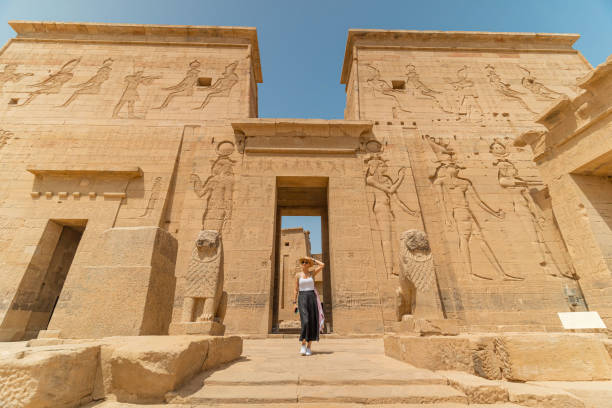
Philae Temple was constructed in 690 B.C and it had been relocated with the help of the UNESCO because it was in great danger from the High & Low Dams of Aswan. It was dedicated to goddess Isis.
After having Lunch drive towards Luxor. Upon arrival I will then take you, in our deluxe vehicle, to your Aswan hotel to check in and over night.
Overnight in Aswan
Meals: Breakfast & Lunch
A new day starts with breakfast, and then you and your guide are going to visit the Nubian Museum, then drive to Luxor and check in.
Discover the colorful culture of Nubia, one of Africa's oldest civilizations, traveling by felucca sailboat or modern motorboat, you'll meet locals, visit a traditional house, drink tea, and have free time to explore villages independently while Kitchener’s Island, to the west of Elephantine Island, was given to Lord Horatio Kitchener in the 1890s when he was commander of the Egyptian army. Kitchener turned the entire island into the stunning Aswan Botanical Gardens, importing plants from the Far East, India and parts of Africa.
Exploring the Vibrant Traditions of the Old Aswan Market
Nestled in the heart of Aswan and a stone's throw away from Basma Hotel, the Old Aswan Market, affectionately known as the souk, beckons visitors with its alluring charm and authentic ambiance. For travelers seeking an extraordinary shopping experience that embraces local culture and traditions, the Aswan Market stands as an essential destination.
The Nubian Museum
Opened in 1997, the Nubian Museum is a belated, but well-executed, tribute to the culture and influence of Nubia and the Nubian people on the history of Egypt. This ancient culture, every bit as old as that of Ancient Egypt, existed along the banks of the Nile for millennia in the areas we call southern Egypt and northern Sudan today.
After the end of the tour, you will be driven to your hotel and overnight in Aswan.
Overnight in Aswan hotel
Meals: Breakfast, Dinner
Drive from Aswan to Luxor
At the morning, enjoy your breakfast in the hotel and check out then you will be driven to Luxor. Once you arrive there the rest of the day is yours to relax or to choose one of our available activities there.
Overnight in Luxor hotel
Meals: Breakfast, Lunch
Optional Tour to Abu Simbel Temples
[[[You may choose to visit Abu Simbel to see these marvelous temples, which were originally carved out of a rocky mountainside by Ramses II.
Abu Simbel temple complex includes 2 individual temples that were built during the reign of Pharaoh Ramses II. The great temple was built for the king himself to commemorate his coronation and his birthday and it has been built in a very impressive accurate way which makes the whole world await the Sun Festival that occurs only twice a year in the great temple of the Pharaoh to witness the miracle that occurs there. The smaller temple was built as a sign of love & appreciation from the king to his beloved queen Nefertari and she was the only wife of the king for whom he has built a temple.
In the beautiful morning, our tour guide will meet you to take you to enjoy a journey in the west bank of Luxor where you will visit:
The Valley of the Kings
The rulers of the Eighteenth, Nineteenth, and Twentieth Dynasties of Egypt’s prosperous New Kingdom (c.1550–1069 BC) were buried in a desolate dry river valley across the river from the ancient city of Thebes (modern Luxor), hence its modern name of the Valley of the Kings. This moniker is not entirely accurate, however, since some members of the royal family aside from the king were buried here as well, as were a few non-royal, albeit very high-ranking, individuals.
The Tomb of King Merenptah
The second-largest tomb in the valley, Merenptah’s tomb has been open since antiquity and has its share of Greek and Coptic graffiti. Floods have damaged the lower part of the walls of the long tunnel-like tomb, but the upper parts have well-preserved reliefs. The corridors are decorated with the Book of the Dead, the Book of Gates and the Book of Amduat. Beyond a shaft is a false burial chamber with two pillars decorated with the Book of Gates.
The Tomb of King Ramses III
One of the most popular tombs in the valley, KV 11 is also one of the most interesting and best preserved. Originally started by Sethnakht (1186–1184 BC), the project was abandoned when workers hit the shaft of another tomb (KV10). Work resumed under Ramses III (1184–1153 BC), the last of Egypt’s warrior pharaohs, with the corridor turning to the right, then left. It continues deep (125m overall) into the mountain and opens into a magnificent eight-pillared burial chamber.
The Tomb of King Ramses IV
Originally intended to be much larger, KV 2 was cut short at 89m on the early death of the pharaoh (1147 BC) and a pillared hall was converted to be the burial chamber. The sarcophagus is in place with a magnificent goddess Nut filling the ceiling above it. Close to the entrance of the valley, this tomb was opened in antiquity and inhabited (there is Greek, Roman and Coptic graffiti), and used as a hotel by many 18th- and 19th-century visitors.
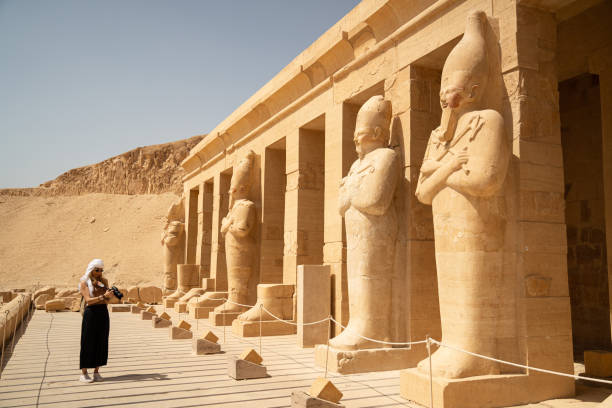
The Temple of Hatshepsut
Hatshepsut (c.1473–1458 BC), the queen who became Pharaoh, built a magnificent temple at Deir al-Bahari, on the west back of Luxor. It lies directly across the Nile from Karnak Temple, the main sanctuary of the god Amun. Hatshepsut’s temple, Djeser-djeseru “the Holy of Holies” was designed by the chief steward of Amun, Senenmut.
The Colossi of Memnon
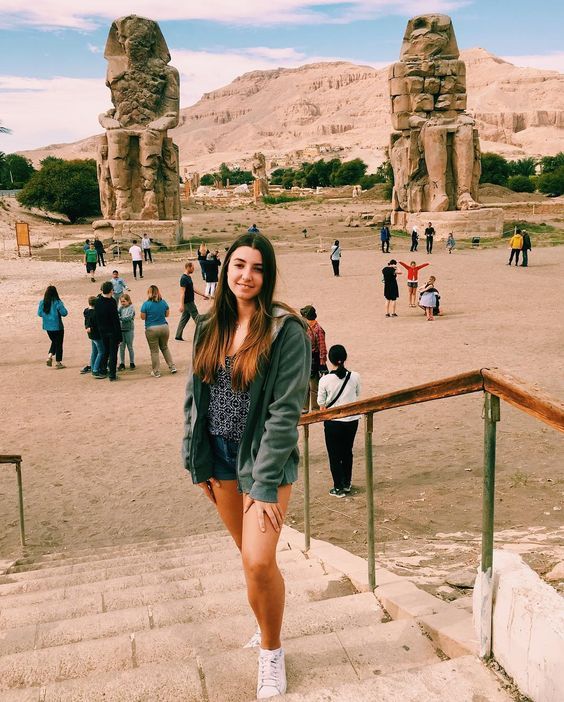
These two faceless colossi (the plural of colossus, which just means larger-than-life statue) are the first thing visitors see when they reach the west bank of the Nile opposite Luxor. This isn't surprising when you hear their dimensions: they tower 60 feet (18 m) above the plains and are estimated to weigh an enormous 720 tons each.
After finishing your last visit you will be driven to your hotel to check in and Overnight.
Overnight in Luxor Hotel
Meals: Breakfast, Lunch
In the beautiful morning, our tour guide will meet you to take you to enjoy a journey in the East bank of Luxor where you will visit:
The Complex of Karnak Temples
Built over two millennia between the years of around 2200 and 360 BCE, Karnak is a massive Ancient Egyptian temple complex that was one of the country's most important places of worship under the rules of Hatshepsut, Seti I, Ramesses II and Ramesses III.
The Temple of Luxor
Luxor Temple, Ipet‑resyt “Southern Sanctuary” to the ancient Egyptians, was so called because of its location within ancient Thebes (modern Luxor). It is located around three kilometers to the south of Karnak Temple, to which it was once linked with a processional way bordered with sphinxes. The oldest evidence for this temple dates to the Eighteenth Dynasty (c.1550–1295 BC).
After finishing your last visit you will be driven to your hotel to check in and Overnight.
Overnight in Luxor Hotel
Meals: Breakfast, Lunch
Fly back to Cairo from Luxor
After breakfast, you will be transferred to Luxor airport for the flight back to Cairo and check in at your Cairo hotel. Later have lunch in a local restaurant and enjoy watching Sunset in Cairo from Cairo tower
Cairo Tower
The Cairo Tower or El Gezira tower or (Borg El Qahira) in Arabic language is consider one of the most prominent features of the Egyptian capital. Its partially open lattice-work design is intended to evoke a lotus plant. Cairo tower was built from 1956 to 1961 during the presidency of Gamal Abdel Nasser with Soviet assistance.
Enjoy your lunch and it will be served at a local restaurant after the day tour. Then return to your hotel and overnight in Cairo.
Overnight in Cairo Hotel
Meals: Breakfast
Optional tour Hot air Balloon Ride
Early morning, Egypt Tours representative will pick you up from your hotel in Luxor to the West Bank to enjoy Egypt Hot Air Balloon. Transfer to marine enjoy soft drinks before you take the motor boat to the west bank, then you will be transferred to the take-off area where you are going to start your balloon ride in the sky of the biggest open-air museum Luxor. The "Balloon Ride" trip departs every day, however confirmation in advance is still highly recommended. The balloon ride takes 45 minutes then you will be transferred back to your hotel.
(Qaitbay Citadel – Catacombs – Pompai Pillar )
Your day starts with breakfast in your hotel followed by a 2.5-hour drive, in our air-conditioned vehicle, to Alexandria where you will visit the following.
The Catacombs of Kom Alshaqafa
The Catacombs of Alexandria are the largest and most important burial site in Egypt that has a mixture of Roman, Hellenistic, and ancient Egyptian decorative art and elements that were all common during this period in Alexandria.
The Pmpai`s Pillar
It’s a column that stands on a rocky hilltop in the middle of Alexandria. Pompey Pillar is a triumphal monument erected around 300 AD for the Roman Emperor Diocletian.
Qait Bay Citadel
Qaitbay Citadel has been built during the 14th century by (Sultan Qaitbay) to defend Alexandria from the attacks of The Ottoman Empire. You can enjoy the Sea views, wonderful restaurants, and unforgettable touristic items while visiting it.
Lunch will be served during the day tour in a sea view restaurant in Alexandria and then we will continue our tour to visit
Library of Alexandria
Alexandria Library is the most ancient library of classical antiquity. In it, you can find a copy of every book published all over the World. It’s not just a building, it’s a complex where all arts, philosophy, ancient history come together.
Finally, we will transfer you in a private air-conditioned car to back to your hotel
Meals: Breakfast, Lunch
Fly back home
Breakfast at hotel. Check out and transfer to Cairo International Airport for final departure.
Meals: Breakfast
Hear from travelers who trusted us to create unforgettable journeys and memories.
"The Egypt tour exceeded all my expectations. Our guide was incredibly knowledgeable and the accommodations were fantastic. A truly unforgettable experience!"
New York, USA
"The Nile cruise was absolutely magical. Waking up to the sunrise over the Nile and visiting ancient temples was a dream come true. Highly recommend!"
London, UK
"Petra at night was breathtaking. The candlelit path through the Siq to the Treasury is something everyone should experience. Thank you for organizing such a perfect trip!"
Sydney, Australia
"From the Pyramids to the Red Sea, every moment was perfectly planned. The team was professional and attentive. Can't wait to book our next adventure!"
Toronto, Canada
"The diving in Hurghada was world-class. Crystal clear waters, vibrant coral reefs, and an incredible variety of marine life. Best diving experience of my life!"
Berlin, Germany
Discover more amazing tours similar to this one.